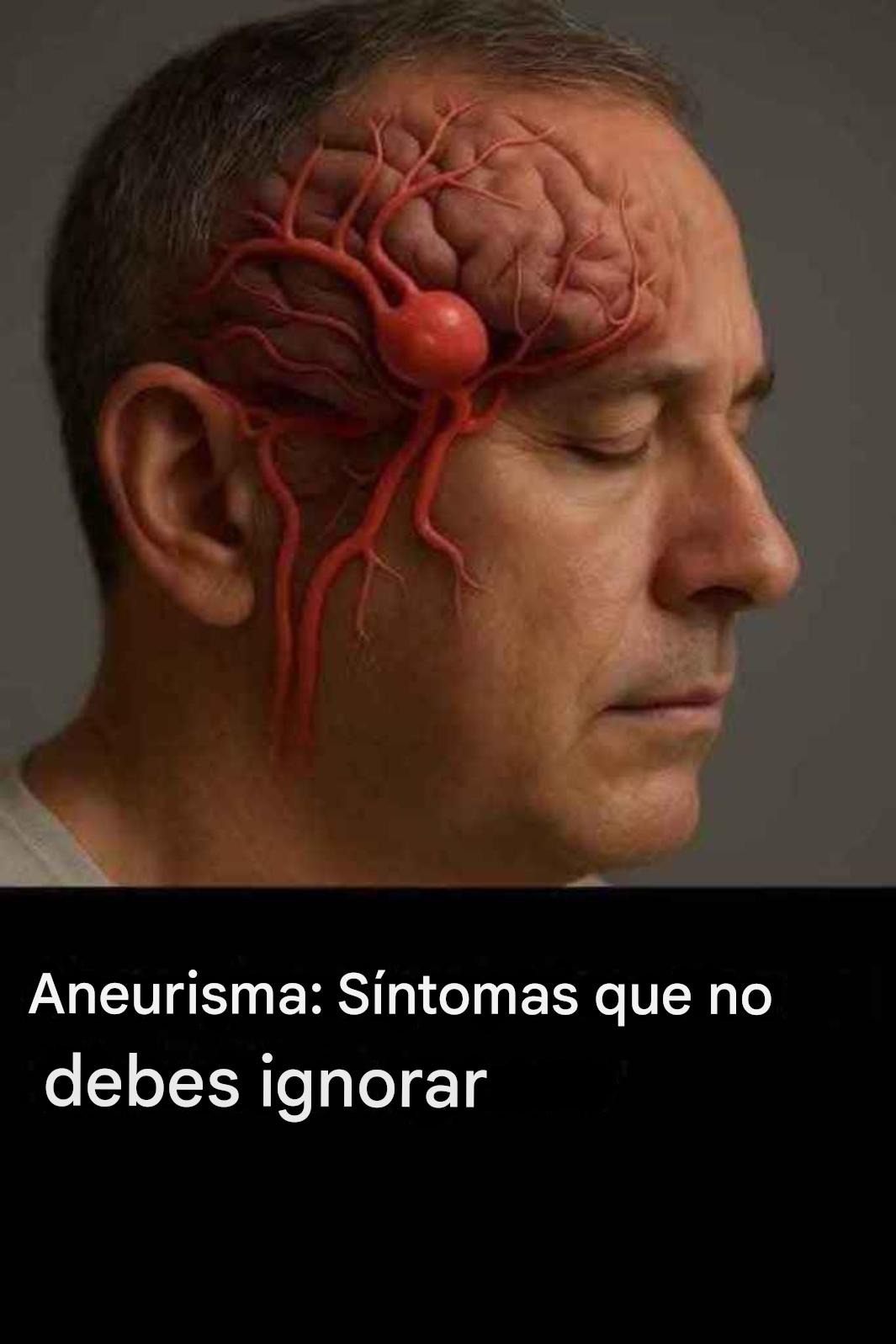
Symptoms of a Cerebral Aneurysm
Sudden, severe headache : Often described as “an explosion” or “the worst headache of my life”.🤯
Nausea and projectile vomiting, without apparent cause.
Blurred or double vision, and extreme sensitivity to light (photophobia) .
Stiffness in the neck .
Seizures, loss of consciousness, or severe confusion .
Drooping eyelid (ptosis) or difficulty moving the eyes.
Symptoms of an Abdominal Aortic AneurysmDeep abdominal pain, lumbar pain (in the lower back) or even in the flanks . It can be constant or throbbing.
A sensation of a strong throbbing in the abdomen , as if the heart were beating in the stomach.
In case of rupture: Unbearable abdominal or lower back pain, hypotension (shock), dizziness, paleness, and loss of consciousness . This is an extreme situation.
Emergencies: Acting Quickly Can Save a Life🚨
A ruptured aneurysm is an absolute medical emergency . Every minute counts. If you or someone close to you experiences:
A sudden, explosive headache unlike anything ever felt before.
Acute and debilitating abdominal or lower back pain accompanied by dizziness, cold sweats, or fainting.
Loss of consciousness, difficulty speaking, weakness on one side of the body, or seizures .
Don’t wait! Call emergency services immediately (or go to the nearest hospital) . Do not attempt to drive yourself. Clearly mention your suspicion of a possible aneurysm so that care is given priority.
Available Medical Diagnosis and Treatments🏥
It is crucial to understand that there are no “home remedies” to cure an aneurysm . Management should always be supervised by a specialized medical team (neurologists, neurosurgeons, vascular surgeons).
1. Monitoring and Preventive Control (For Small and Stable Aneurysms)
If the aneurysm is small and has not ruptured, the strategy may be active surveillance.
Regular check-ups with imaging techniques : CT angiography, magnetic resonance imaging (MRI) or Doppler ultrasound to monitor any changes in size or shape.
Strict control of blood pressure with medications such as beta-blockers or ACE inhibitors.
Radical lifestyle changes : Quitting smoking is the number one preventative measure . 🚭In addition, a diet low in salt and saturated fats, and moderate, regular exercise are recommended.
2. Reconstructive Surgery (For Large, Rapidly Growing or Ruptured Aneurysms)
The goal is to “deactivate” the aneurysm to prevent it from bleeding or bleeding again.
Surgical Clipping (for cerebral aneurysms)🧠 : A craniotomy is performed, and a titanium clip is placed at the neck (base) of the aneurysm, isolating it from the bloodstream. It is a very effective and long-lasting procedure.
⏩continúa en la página siguiente⏩
